If your asphalt driveway in Phoenix is faded, cracked or patchy, the choice is usually between resurfacing it with a new layer of asphalt or tearing it out and replacing it. The answer depends on one thing more than any other: whether the base underneath is still sound. Resurfacing a driveway with a good base can add years of life for less money. Resurfacing one with a failed base wastes the money, because the damage comes right back through. Here is how to tell which one you have, whether you live in Phoenix, Scottsdale, Mesa or anywhere else in the Valley.
What Arizona does to an asphalt driveway
Asphalt is held together by a petroleum binder. Years of strong desert sun dry that binder out, which is why older driveways fade from black to gray and start to feel rough. Dried-out asphalt gets brittle and cracks more easily.
Heat adds a second kind of wear. On summer afternoons, pavement in the Phoenix area gets hot enough to soften, so parked cars, trailer tongues and tight turns can leave dents and scuffs.
Then there is water. The Valley is dry most of the year, but monsoon storms dump a lot of rain fast. Water that gets into cracks softens the base below, and that is where small problems turn into big ones.
Signs resurfacing will work
- The surface is faded, rough or raveling, with small stones coming loose.
- Cracks are mostly narrow and in straight lines, not spreading in a web.
- The driveway is still flat, with no sunken areas where water collects.
- Any potholes are few and small enough to repair before the overlay.
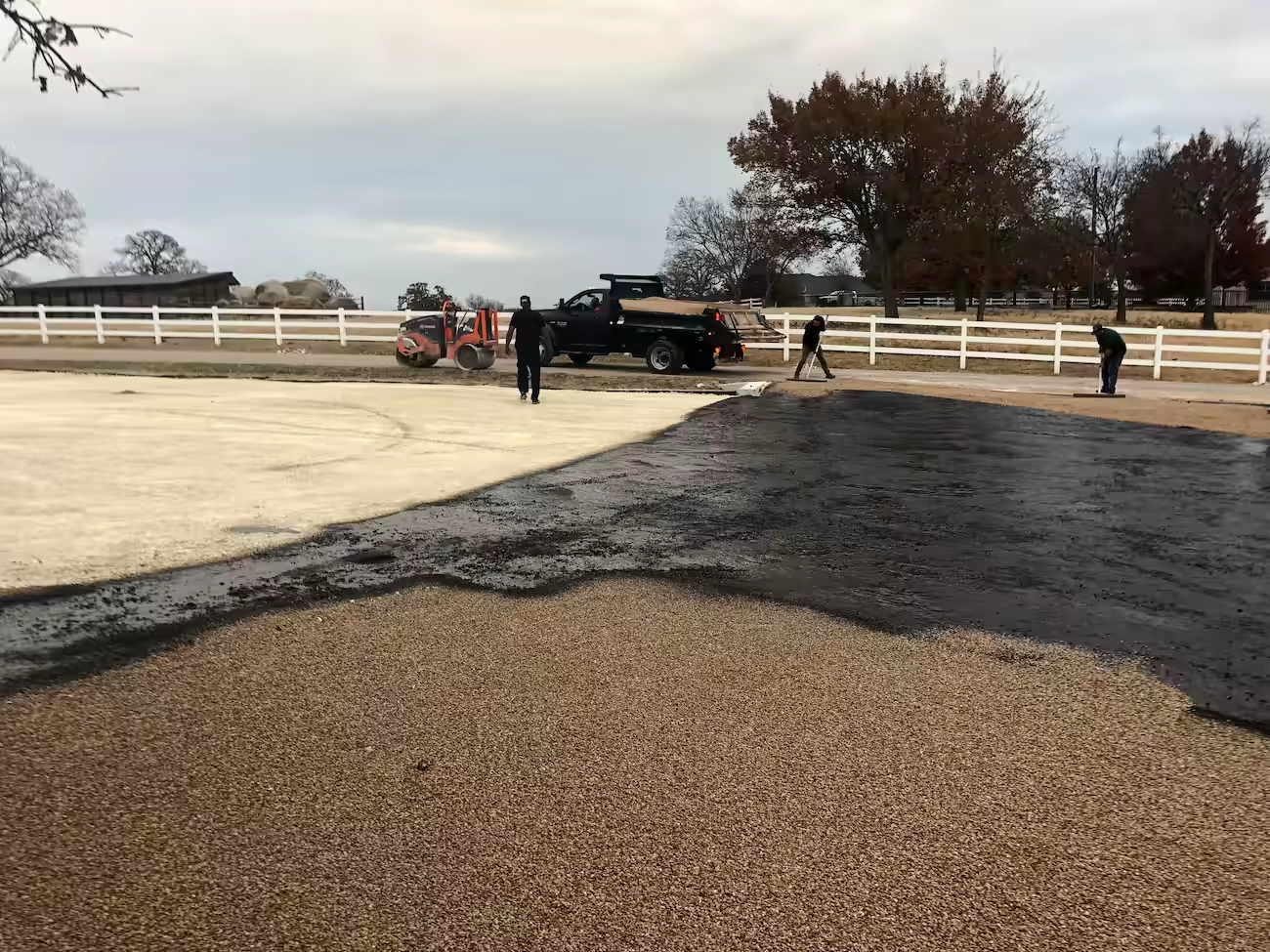
If that sounds like your driveway, asphalt resurfacing is often the better value. We clean the surface, repair the cracks and weak spots, apply a tack coat so the layers bond, and lay a new layer of hot asphalt on top, usually around an inch and a half to two inches thick. You get a fresh black surface without the cost of hauling the old one away.
Signs it is time to replace
- Alligator cracking. Cracks in a tight web pattern, like the skin of an alligator, usually mean the base has given out.
- Sunken areas and ruts. Low spots where water sits, or tire ruts, point to a soft or thin base.
- Lots of potholes, or patches that keep failing.
- Drainage problems that need the driveway reshaped, such as water running toward the garage.
- Height limits. If another layer would sit too high against the garage slab, a sidewalk or the street, the old asphalt may need to come out.
Replacement means removing the old asphalt, fixing and compacting the base, correcting the slope, and laying new asphalt. It costs more than an overlay, but it resets the clock on the whole driveway. Our driveway paving and residential asphalt paving pages explain that process.
Resurfacing and replacement side by side
| Resurfacing (overlay) | Replacement | |
|---|---|---|
| Best when | Base is sound, damage is on the surface | Base has failed, or the driveway needs reshaping |
| What happens | Repairs, tack coat, new top layer | Old asphalt removed, base rebuilt, new asphalt laid |
| Relative cost | Lower | Higher |
| Typical life added | Often 8 to 15 years | Often 15 to 20 years or more with upkeep |
| Fixes drainage? | Only minor issues | Yes, slope can be corrected |
Sometimes the answer is both: replace the failed section near the garage or the street, and resurface the rest so it all matches.
A note on HOAs
Many neighborhoods in Gilbert, Chandler and the rest of the East Valley have HOA rules on driveway materials and appearance. A straight resurfacing in the same material often needs little review, while widening a drive or changing materials usually needs approval first. Check before you book so the schedule does not slip.
Timing your project in the Valley
Asphalt is laid hot, and it handles warm weather well, so paving goes on most of the year in the low desert. Fall through spring is the most comfortable stretch for both the crew and the new surface. In summer, work is scheduled early in the day, and a new driveway may need a little longer before it takes heavy loads. Once it is down, a seal coat every few years helps protect the binder from the sun, which is the biggest single thing you can do to make an Arizona driveway last.
Keeping the new surface in good shape
Whichever route you take, a few simple habits help the driveway last:
- Fill cracks early. Sealing small cracks before monsoon season keeps water out of the base.
- Seal coat on a schedule. Every few years is typical in the Valley, sooner on driveways that get full afternoon sun.
- Keep water moving. Point downspouts and irrigation away from the edges, and clear debris from any drain.
- Go easy in the heat. Avoid turning the wheel while parked and use a board under trailer jacks and motorcycle stands in summer.
- Watch the edges. Edges without support crumble first, so keep soil or landscaping snug against them.
Not sure which one you need?
You do not have to guess. We look at the cracks, the base and the drainage, tell you honestly whether resurfacing will hold, and give you a free estimate for the work that makes sense. That goes for homes in Glendale and the West Valley as much as anywhere in the metro. Ask about the site's 15% paving savings when you call.
We do this work in Phoenix, Scottsdale, Mesa, Gilbert, Chandler and Glendale and across the Phoenix area.
Common questions
How long does an asphalt overlay last?
An overlay on a sound base often lasts 8 to 15 years in the Phoenix area, depending on traffic, drainage and how well it is maintained. It will not outlast a base that is already failing.
Can you resurface over alligator cracking?
Not well. Alligator cracking usually means the base underneath has failed, so the cracks come back through a new layer. Those areas need to be dug out and repaired, or the driveway replaced.
How soon can I drive on a new asphalt driveway?
Usually within a few days for cars, longer in summer heat. Avoid sharp turns, parked trailers and jack stands for the first several weeks while the asphalt hardens.
Does my HOA need to approve driveway work?
Many Phoenix-area HOAs ask for approval before driveway work, especially if the size, color or material changes. Check your HOA guidelines before scheduling.