Chip Seal or Asphalt for Long Driveways in Phoenix and Mesa
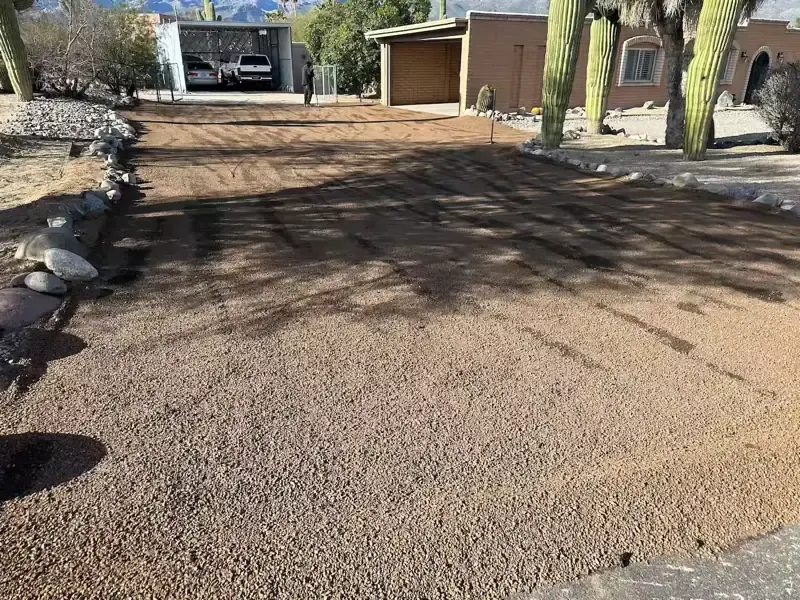
For a long driveway in the Phoenix area, the choice between chip seal and asphalt paving comes down to the finish you want, how the drive is used and what shape the base is in. Chip seal (also called tar and chip) gives a textured, stone-faced surface that suits long, low-speed drives. Asphalt gives a smooth, continuous surface that suits tight turns, frequent traffic and a clean look near the house. Either one fails early on a weak base, so check that first.
How chip seal and asphalt differ
Chip seal starts with a liquid binder, an asphalt-based glue, sprayed onto a prepared surface. A layer of crushed stone is then rolled into it so the binder grips the chips. A tar and chip driveway ends up with a rough, stone-faced top that sheds some of the slickness of a smooth surface.
Asphalt paving works differently. Hot mix, which is stone and binder blended together, is laid in a layer and compacted with rollers into one continuous surface. The result is flat and smooth, and it leaves no loose stone.
Under tires the two feel different. Chip seal is grippy and a bit noisy, and a little loose stone is normal in the first days until the surface settles. Asphalt is quiet and smooth, and it is easier on bare feet, bikes and skateboards.
The base matters for both. The base is the compacted material under the surface, and it carries the weight. If it is soft, thin or holding water, neither surface will stay flat for long.
Which surface fits your driveway
Traffic and turning
A long drive with a few cars moving at low speed is where chip seal tends to fit well. Tight turns are harder on it. Heavy vehicles cranking the wheel while parked or backing up can scuff stone loose, so a turnaround or parking pad is often better as asphalt. Some owners use both: asphalt near the house and garage, chip seal along the long run to the street.
Finish and look
If you want a smooth, dark, uniform surface, driveway paving in asphalt is the straightforward choice. If you want a more rustic, natural look that matches an acreage or ranch-style property, chip seal usually suits better. For a standard home drive, residential asphalt paving covers the details of that route.
Upkeep as each surface wears
Chip seal wears mostly through stone loss in the wheel paths and at turning spots. Those areas can often be patched or re-chipped. Asphalt tends to show cracks first, which should be sealed before water gets into the base, and a worn surface can later be resurfaced. Our post on what sets the cost of a chip seal driveway in Arizona covers the money side.
| Factor | Chip seal | Asphalt |
|---|---|---|
| Surface feel | Textured, stone-faced, grippy | Smooth and continuous |
| Best use | Long, low-speed drives | Turnarounds, parking pads, frequent traffic |
| Tight turns | Can scuff stone loose | Handles them well |
| Wear pattern | Stone loss in wheel paths | Cracking and surface wear |
| Later repair | Patch or re-chip | Crack sealing, then resurfacing |
Phoenix area weather and lot conditions
Phoenix metro summers typically run very hot from June to September, and winters are generally mild. Snow and hard freezes are rare here, so freeze-thaw damage is not the main worry it is in colder states. Sun and heat are the bigger factors, along with runoff from storms that often arrive in the monsoon months of July to September.
Sun exposure changes how a surface behaves. A drive in full afternoon sun gets hotter than one shaded by a house or trees, and heavy point loads such as a trailer tongue or a kickstand can leave marks on any hot surface. Look at your own drive in the afternoon and note where it bakes and where it stays cooler.
Runoff matters too, especially on a long drive. If your drive climbs to the street, crosses a low spot or sits beside a wash, water will find the weakest edge. If your soil is sandy or clay, ask how that affects the base, because it changes how it should be built.
Owners in Phoenix, Mesa, Chandler and Gilbert should not assume one surface will work the same on every lot. Two drives on the same street can have different drainage, shade and traffic, and that is what should decide the material.
What to check before making a choice
Walk the drive before you call anyone, and write down what you see:
- Cracks, and whether they are hairline or wide enough to fit a coin.
- Loose areas where the surface crumbles or stone is missing.
- Spots that have settled or hold water after rain or irrigation.
- Drainage paths, meaning where water enters the drive and where it leaves.
- Where vehicles turn, park and back up.
Then ask each crew how the base will be checked and prepared for the surface they propose. A good answer covers what they will test, what they will repair and how the edges and drainage are handled. If your drive already has asphalt that has worn, our post on resurfacing or replacement in Phoenix helps you judge what is left to work with.
Measure the length and width, take notes on the problem areas and have a crew compare both options after looking at the base. We offer a Free Estimate for driveways across the Phoenix metro, and we can walk the drive with you and explain which surface fits it.
Common questions
Is chip seal cheaper than asphalt for a long driveway?
Often it is, but it depends on drive length, width, access and how much base repair is needed. A weak base adds cost to either surface, so the estimate should be based on an inspection.
Can you chip seal over an existing asphalt driveway?
Sometimes, if the base and the old surface are sound. Wide cracks, soft spots and failed areas usually need repair first, or they will show through the new surface.
Does chip seal hold up in Phoenix heat?
It can on a well-built base, since the stone is rolled into the binder and the surface is made for hot, dry climates. Heavy turning in full sun is the hardest test, so ask about turnaround areas when you compare options.
Topics
Areas we serve
Our services
Have a question about your project? Call (520) 221-1919