
How to Make a Chip Seal Driveway Last in Anthem and Cave Creek
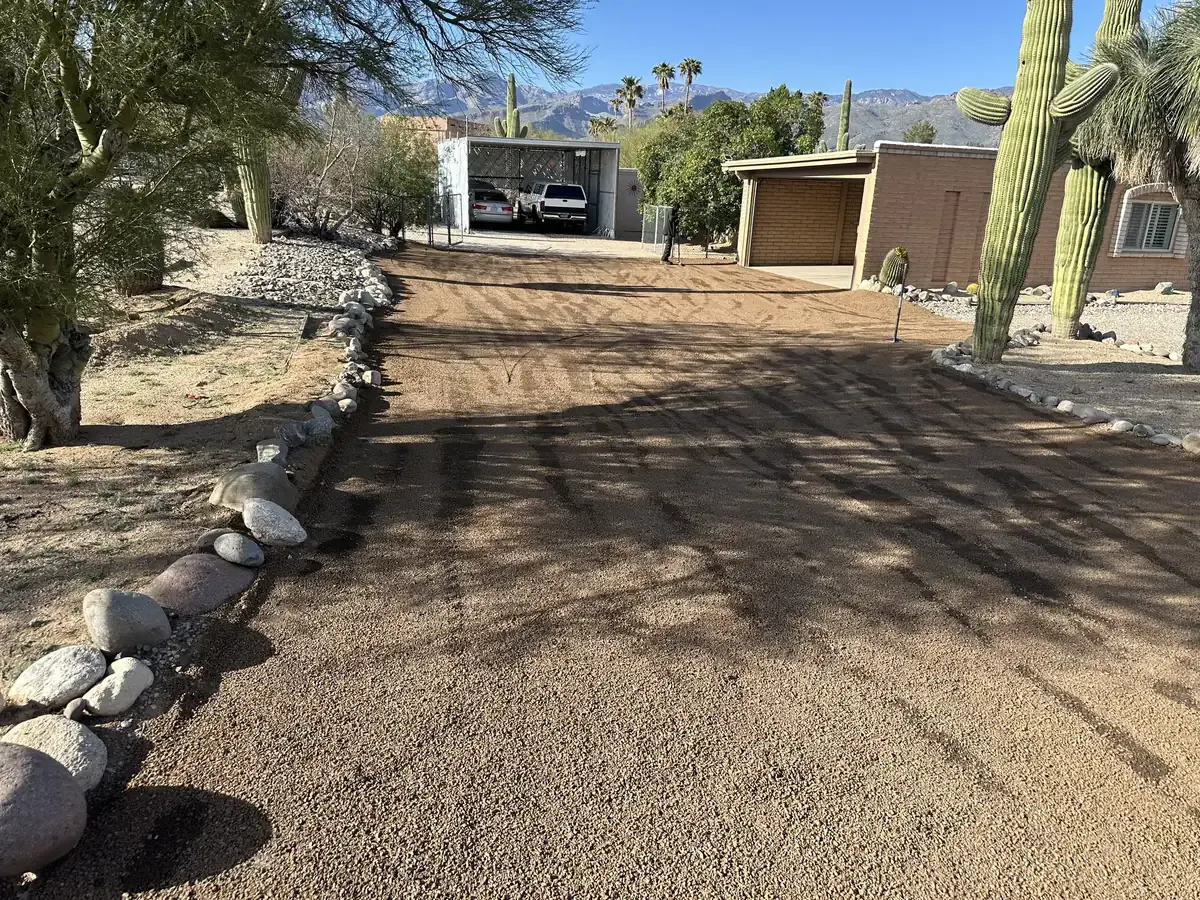
With good drainage, a chip seal driveway in the Phoenix metro often runs 7 to 10 years before it needs serious attention. Treat that as a typical range, not a promise. If you own a home or acreage in Anthem, Cave Creek or Carefree, you have more say in where your drive lands in that range than you might expect.
What affects how long chip seal lasts
Chip seal, also called tar and chip, starts with hot asphalt binder sprayed over a prepared surface. Crushed stone is then rolled into it. The binder is the sticky asphalt that holds each stone in place. Sun dries it out and traffic scuffs it, and when the binder gets thin, stone begins to come loose.
Three factors decide how quickly that happens:
- Base preparation. The base is the compacted layer of material under the surface. If it is soft or uneven, you will see dips, cracks and stone loss sooner.
- Traffic. Straight daily trips are gentle. Sharp turns, hard braking, trailers and heavy equipment are rough on it.
- Water movement. Water that stands on the surface or soaks under it softens the base and breaks the grip between binder and stone.
Picture two neighbors who had drives done in the same week. One drive slopes so water leaves the edge, vehicles roll straight up it, and the base was built firm. The other has a low corner that holds water and a tight turn at the garage. The first will usually look good long after the second starts to ravel (shed stone). When you talk to a crew about a tar and chip driveway, ask how they will prepare the base and handle runoff. Those answers tell you more about lifespan than any number of years.
Phoenix area conditions in Anthem, Cave Creek and Carefree
Summers from June through September usually bring high heat and dry weather, and that sun slowly ages binder. Winters from December through February are generally mild, so freeze damage is not the main concern here. Heavy storms are the bigger test. Monsoon downpours, which often arrive between July and September across Arizona, can push a lot of water over a drive in a short time.
So the town matters less than the lay of your own property. If your drive sits on a slope, watch where runoff crosses it and whether it carries stone or soil. If your lot is flat, look for spots where water lingers after a storm. On a long rural drive or a tar and chip ranch road, one washed-out crossing can ruin a lot of sound surface. We go deeper on that in our guide to chip seal ranch roads and private roads in Arizona.
After the first heavy monsoon rain, walk the drive and note where water pooled or ran across. Walk it again in the cooler months, when you can study wear without squinting in the glare.
Maintenance that helps protect the surface
Chip seal needs less care than many surfaces, but it still needs some. Nearly all of it costs nothing but your time.
Give water a way out
Clear leaves, dirt and gravel from ditches, culverts, swales and the edges of the drive. Do not let soil pile up where pavement meets ground, because it holds moisture against the surface. A drive with a clear exit path for water takes far less punishment.
Learn what trouble looks like
Small changes are easier to fix before storms and traffic make them bigger. Here is what to look for and what it usually points to:
- Loose stone along the edges or in the wheel paths. The binder may be wearing, or the edge may lack support. Note where it is worst.
- Dark, shiny patches where stone is missing. That is exposed binder. Keep heavy turning off the spot until someone looks at it.
- Water standing after rain. Usually a low spot or a blocked path. Clear debris and mark the place.
- Wear concentrated where you turn or brake. Traffic stress is landing on one patch. Change your turning line if you can.
A bit of loose stone is normal in the first days after a new chip seal goes in. Ask your contractor what to expect and how long to keep traffic gentle. Stone that keeps shedding long after that deserves a closer look.
A practical check for your driveway
Set aside about twenty minutes and walk the whole drive from the street to the garage or gate.
- Mark worn areas, especially where vehicles turn, park or brake.
- Note loose stone and any dark patches of exposed binder.
- Trace the water: where it collects, where it crosses and where it leaves.
- Clear drainage paths and edges of debris.
- Write down what you found, with rough locations, and show the list to a paving contractor.
With those notes in hand, a contractor can judge the surface and the drainage together, which is the honest way to estimate how much life is left. If you are leaning toward a new drive instead, the cost factors behind a chip seal driveway are laid out in a separate post.
If you would like a second set of eyes on your drive or road, Copper Canyon Paving offers a Free Estimate.
Common questions
How do I maintain a chip seal driveway?
Keep drainage paths and edges clear, and walk the drive a few times a year looking for loose stone, exposed binder and pooling water. Report small changes early so they can be assessed before storms and traffic make them worse.
Is loose stone normal on a new chip seal driveway?
Some loose stone is typical in the first days as the surface settles, and a contractor may sweep off the excess. Stone that keeps coming loose well after that, especially in wheel paths, is worth having looked at.
Does Arizona heat shorten chip seal life?
Sun and heat age the binder over time, but heat is rarely the only factor. Poor drainage, a weak base and tight turning or braking in one area usually decide how long the surface holds up.
Topics
Areas we serve
Our services
Have a question about your project? Call (520) 221-1919